
Ask ten people which martial art is best for self-defence and you will get ten answers. Ask anyone who has actually been in a scuffle and most will tell you the same thing: it was nothing like the films. Somebody grabbed, somebody shoved, and within seconds both people were tangled up against a wall or on the floor.
That tangle is where Brazilian Jiu-Jitsu lives. Here is an honest look at what BJJ gives you for self-defence, where it falls short, and what that means if you are thinking of starting.
Why BJJ works when things get physical
Jiu-jitsu was shaped in Brazil from Japanese judo and jiu-jitsu, and the Gracie family refined it around one idea: a smaller, weaker person can control a bigger, stronger one using leverage, position and timing rather than size. The world saw it at the first UFC in 1993, when Royce Gracie, one of the lightest men in the tournament, beat strikers and wrestlers by taking them down and making them submit.
For self-defence, three things make BJJ stand out:
- You practise against people who resist. In nearly every class you finish with sparring (we call it rolling) against a partner who is trying just as hard to stop you. Techniques that only work on a willing partner get found out quickly.
- You learn to stay calm under pressure. The first time someone heavier pins you, it is uncomfortable. By the twentieth time, you breathe, you think and you work your way out. That composure is worth more than any single technique.
- You can control someone without hurting them. Not every situation calls for a punch. Pinning, holding and escaping let you deal with a drunk mate, a family member or a stranger with far less risk of serious injury on either side.
What BJJ can’t do
Any coach who tells you their style solves everything is selling something. BJJ has limits, and knowing them is part of training it properly.
- Multiple attackers. Rolling around on the floor with one person while his friends stand over you is the worst place to be. Against a group, the goal is to stay on your feet and get away.
- Weapons. No martial art makes a knife safe. If a weapon appears, you leave.
- Hard ground. Pulling guard on a pavement is a very different thing from pulling guard on a mat.
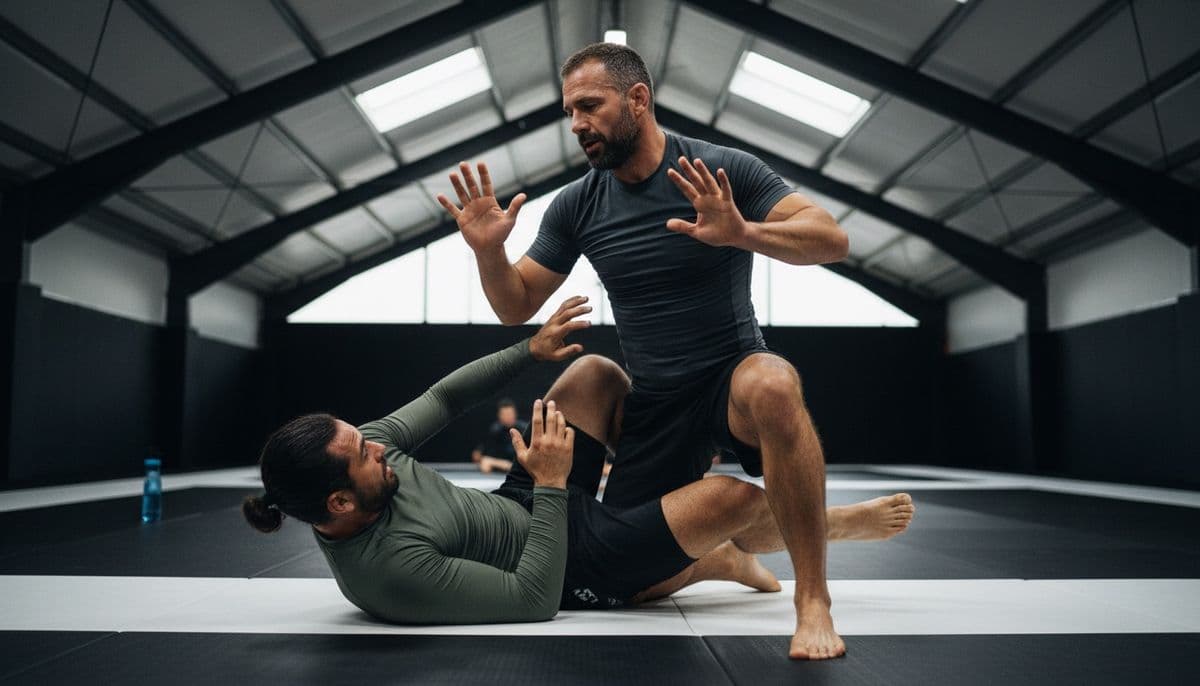
That is why good self-defence jiu-jitsu puts as much weight on getting back to your feet, breaking grips and creating distance as on finishing with a submission.
The best self-defence is not being there
The most useful skills are the least glamorous: noticing trouble early, keeping your distance, keeping your ego in check and walking away. The law in England and Wales allows you to use reasonable force to protect yourself or someone else, and no more than that. Training makes it easier to choose the calm option, because you are not walking around wondering whether you could handle yourself. You already know.
How we train it at SWBJJ
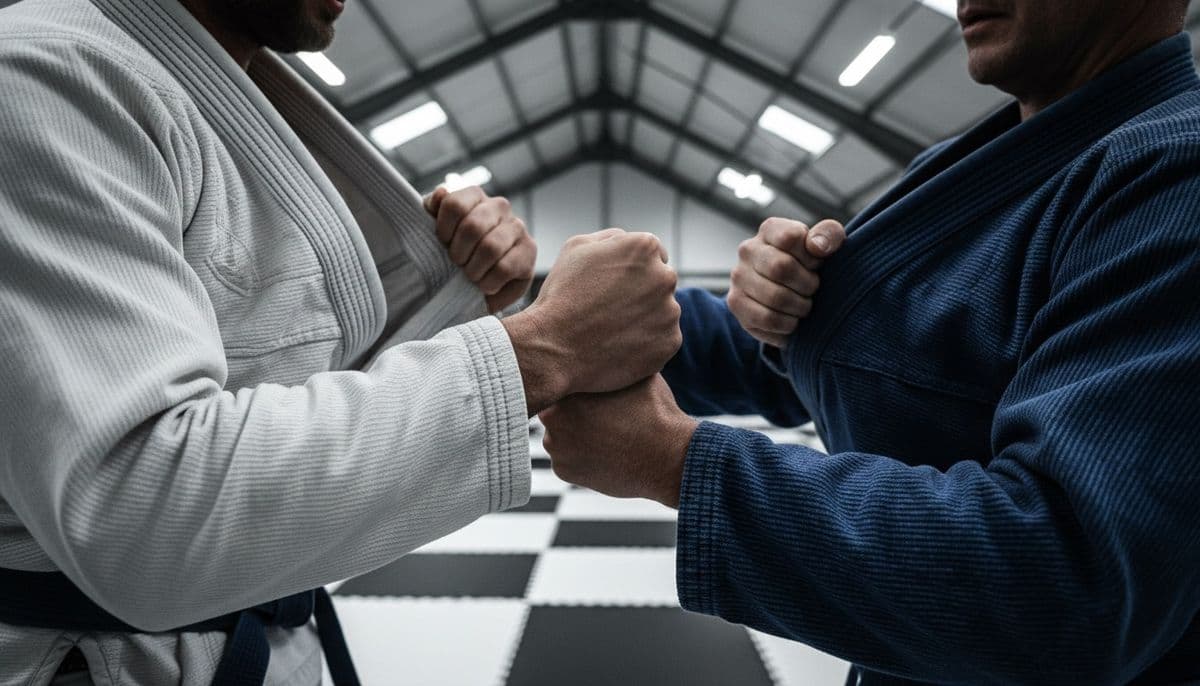
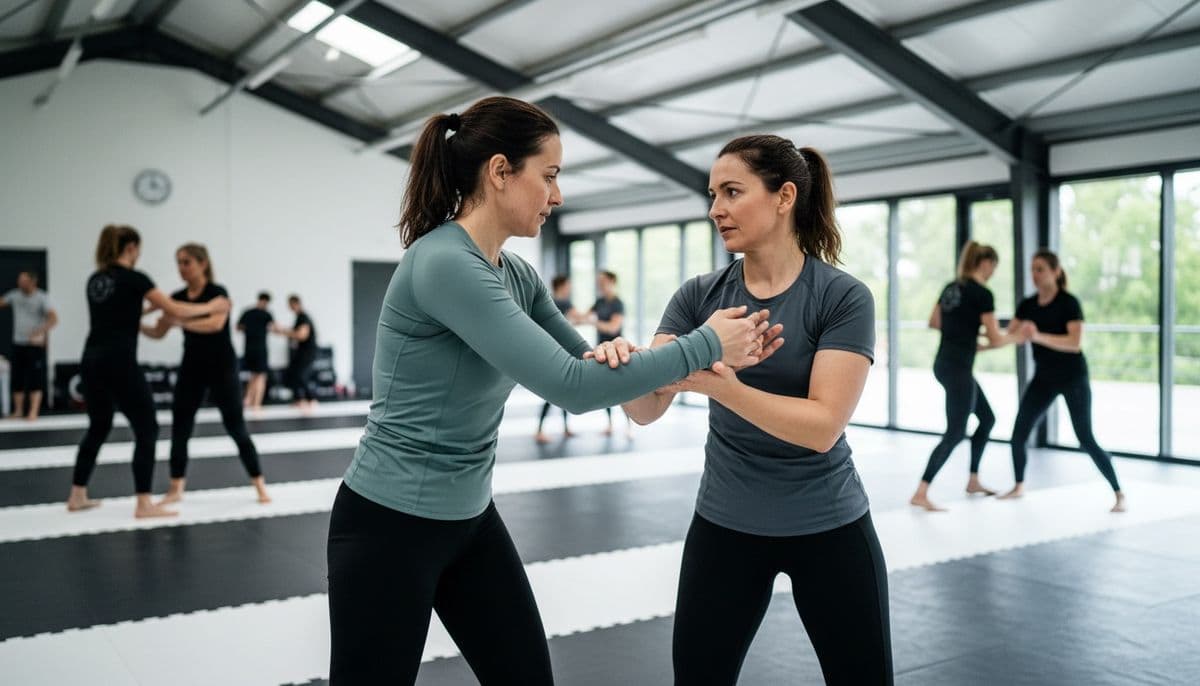
Beginners start in our fundamentals classes: escapes from bad positions, getting up safely, controlling someone on the ground and a small number of submissions you will actually remember. Classes are run by a coaching team led by head coach Sonny Weston, a black belt under Keith McKenzie in the lineage of Ricardo and Leo Vieira. You will train in the gi and no-gi, and both teach you something different: the gi teaches grips and control against clothing (useful, since most people wear some), no-gi teaches you to deal with a bare, sweaty opponent.
If you want striking as well, the Adults membership includes Thai boxing with Horsham Muay Thai under the same roof. Grappling plus striking covers every range.
How to start at SWBJJ
There are no free sessions at SWBJJ: every class is coached and paid for. Starting is simple. Tell us a little about you and a coach will call, WhatsApp or email to suggest the right first class and answer your questions. Adults train from 16, and the Adults membership is £98 a month with no joining fee and no contract beyond the month. It covers jiu-jitsu in the gi and no-gi, open mats, Thai boxing, yin yoga and, from 18, the strength gym.
We are at Unit T, Blatchford Road, Horsham RH13 5QR, inside The Farm, with a car park at the unit and a café that looks onto the mat. Prefer to talk first? Call 01403 864444.